
How to Choose Supplements – The Complete Science-Based Guide


Learn how to choose supplements wisely with our evidence-based guide. Discover what works, what doesn’t, and how to avoid costly mistakes when selecting the right supplements for your goals.
Introduction
Here’s a jaw-dropping fact, Americans spend more than $70 billion every year on supplements, yet research shows most people pick the wrong ones! Sound familiar? I remember, many times, standing in the supplement aisle, totally confused by flashy labels and big promises. The truth is, choosing the right supplements doesn’t have to be rocket science – but you do need to know how to ignore the marketing tricks.
In this guide, I’ll show you exactly how to pick supplements based on real science, not fancy advertising. You’ll learn to spot high-quality products, avoid expensive junk, and make smart choices that actually help your health goals!
Research Source: According to Precedence Research (2024), the U.S. dietary supplements market was valued at $71.60 billion in 2024 and is projected to reach $162.40 billion by 2033. The Council for Responsible Nutrition’s 2023 Consumer Survey found that 74% of U.S. adults take dietary supplements.
Understanding Your Supplement Needs First
Before you spend a single dollar on supplements, you need to know what your body actually needs versus what companies want you to think you need.
How to figure out what your body is actually missing
Start by tracking your food for at least a week using an app like Cronometer or MyFitnessPal. Look for nutrients you’re consistently not getting enough of, not just calories or protein.
The difference between wants vs. real needs
- Wants: Energy boosters, fat burners, muscle builders that influencers promote
- Real needs: Nutrients you’re actually lacking based on your food and blood tests
- Common tricks: Making you feel like you urgently need supplements you probably don’t
Pro Tip: Keep a food diary for one week before buying any supplements. You might discover you’re already getting most nutrients from food and only need to fill 1-2 specific gaps.
Why blood tests can save you hundreds of dollars
A basic blood panel costs $50-150 but can prevent you from wasting money on supplements you don’t need. Key things to check:
- Vitamin D levels
- B12 and folate status
- Iron levels (ferritin, total iron)
- Magnesium levels
- Thyroid function (TSH, T3, T4)
What most people are actually missing
Based on real population studies, these are the nutritional gaps most people actually have:
Research Source: A major 2023 analysis by Cui et al. published in Frontiers in Nutrition, studying 7.9 million participants from 81 countries, found that globally, 47.9% of people have deficient vitamin D levels (<50 nmol/L).
- Vitamin D: Nearly half of people worldwide are deficient, especially those in northern areas
- Magnesium: Research shows 52.2% of Americans don’t get enough, with some studies finding up to 75% deficiency
- Omega-3 fatty acids: Studies found over 68% of adults and 95% of children don’t get adequate omega-3s
- Fiber: Almost everyone falls short on this one
- Vitamin K2: Often overlooked but important for bone and heart health
Research Sources: Oregon State University’s Linus Pauling Institute (2018) analysis of NHANES data found 52.2% of Americans don’t meet magnesium requirements. A 2021 BMJ Open study by Murphy et al. analyzing NHANES 2011-2012 data found that over 68% of US adults and 95% of children have inadequate omega-3 levels.
How your lifestyle affects what supplements you might need
Your life situation makes a big difference in what nutrients you might be missing:
- Vegetarians/Vegans: Often need B12, iron, zinc, and omega-3 supplements
- Athletes: May benefit from creatine, electrolyte replacement, and extra protein
- Pregnant women: Need folic acid, iron, and DHA
- Older adults: Often need vitamin D, B12, and calcium due to absorption changes
- High-stress jobs: May use up B vitamins and magnesium faster
Reading Supplement Labels Like a Pro
Supplement labels are designed to confuse you, not help you. Here’s how to decode them like a scientist, not a customer.
Understanding the “Supplement Facts” panel – what really matters
The Supplement Facts panel is the only part of the label that the FDA actually regulates. Focus on:
- Serving size: Companies often use tiny serving sizes to make prices look better
- % Daily Value: Helpful for vitamins and minerals, but many good compounds don’t have daily values set
- Amount per serving: Compare this to effective doses from real studies
- Form of the ingredient: “Magnesium (as magnesium oxide)” tells you the specific type they used
Red flags that scream “avoid this product”
Major Red Flags
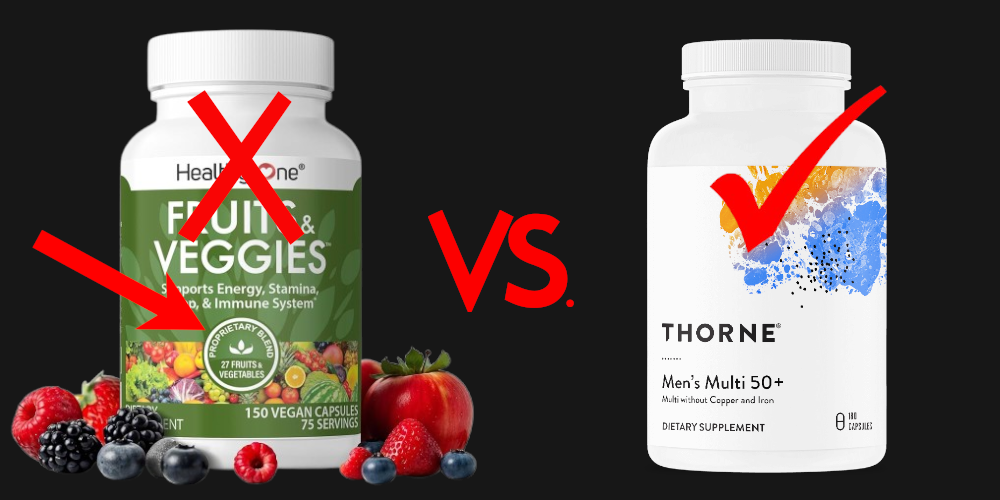
- Proprietary blends: When they hide how much of each ingredient is included
- Artificial colors: Completely unnecessary in supplements
- Titanium dioxide: Questionable safety as a whitening agent
- Mega-doses: Amounts way higher than what research shows is effective or safe
- Kitchen sink formulas: 30+ ingredients in tiny amounts
Why serving sizes can be tricky
Many companies play games with serving sizes to make their products look better or cheaper. Always calculate the cost per effective dose, not per bottle or per serving.
Example: The Serving Size Trick
Product A: 30 capsules, 1000mg per capsule, $20
Product B: 60 capsules, 500mg per capsule, $25
At first glance, Product A seems more expensive, but you’re actually getting the same amount of active ingredient for less money (Product A = $0.02/mg vs Product B = $0.04/mg).
Active ingredients vs. fillers
Every supplement has both active ingredients (the stuff that actually works) and inactive ingredients (fillers, binders, coatings). Common fillers include:
- Necessary fillers: Microcrystalline cellulose, silicon dioxide (help with making the pills)
- Questionable fillers: Artificial colors, unnecessary preservatives
- Helpful additions: Black pepper extract (helps absorption), special coatings (protects stomach-sensitive ingredients)
How to spot “proprietary blends” and why they’re bad news
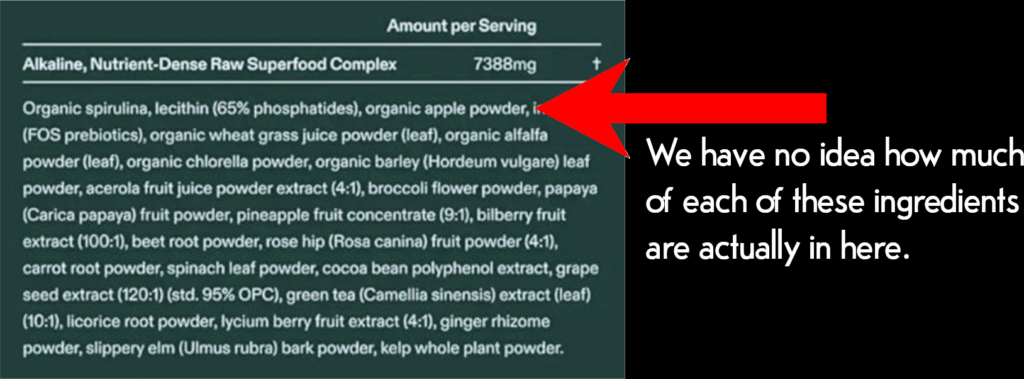
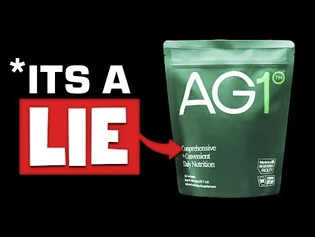
A proprietary blend lists multiple ingredients under one total weight without telling you individual amounts. This is almost always a red flag because:
- You can’t check if you’re getting effective doses of each ingredient
- The blend might be 90% cheap filler and 10% expensive active ingredients
- You can’t figure out which specific ingredients are helping or causing side effects
Third-Party Testing and Quality Certifications
The supplement industry basically regulates itself, which means companies can put almost anything in a bottle and call it a supplement. Third-party testing is your safety net.
Research Source: According to the FDA’s own guidance documents, “FDA does not test dietary supplements before they are sold to consumers.” Harvard Health published findings showing that over 20% of 776 dietary supplements tested contained multiple unapproved ingredients, and a 2024 study found that 30% of supplements purchased online contain contaminants or unapproved ingredients.
Why FDA regulation isn’t what you think it is for supplements
Here’s what most people don’t understand about supplement regulation:
- The FDA doesn’t approve supplements before they hit store shelves
- Companies are responsible for making sure their own products are safe
- The FDA only steps in after problems are reported
- There’s no requirement to prove that supplements actually work
- Quality standards vary wildly between companies
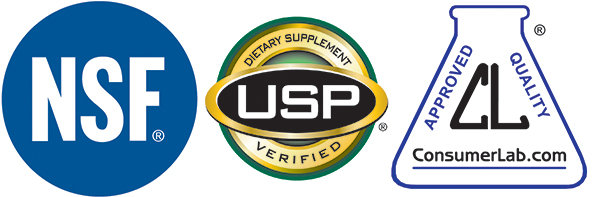
Gold standard certifications to look for
Best Third-Party Certifications
- NSF International: Tests for contamination and checks that labels are accurate
- USP (United States Pharmacopeia): Makes sure products are pure, potent, and high quality
- ConsumerLab.com: Independent testing and quality ratings
- Informed Sport/Choice: Tests for banned substances (crucial for athletes)
- Clean Label Project: Tests for heavy metals and toxins
Research Source: According to NSF International (2023), NSF screens supplements for 280+ substances banned by major athletic organizations. Research shows consumers are willing to pay 20-40% more for supplements with third-party verification marks, making certification increasingly valuable for quality assurance.
How to check if a supplement has actually been tested
Don’t just look for certification logos on the bottle – verify them:
- Visit the certifying organization’s website
- Search their database for the specific product
- Check when the certification was issued and if it’s current
- Look for the specific batch or lot number testing
Good Manufacturing Practices (GMP) certification
GMP certification makes sure supplements are made consistently and meet quality standards. Look for facilities certified by:
- NSF GMP registration
- FDA facility registration
- International GMP standards
Why expensive doesn’t always mean higher quality
Price often reflects marketing budgets and fancy packaging, not quality. Some of the highest-quality supplements come from lesser-known brands that invest in testing rather than advertising.
Real Example
A $60 “premium” multivitamin with celebrity endorsements might have the same ingredients and manufacturing standards as a $15 store brand that’s actually third-party tested. Always check for certifications, not price tags.
Research-Backed Ingredients vs. Marketing Hype
The supplement industry loves to twist scientific research to sell products. Here’s how to tell the difference between real science and marketing tricks.
How to quickly fact-check supplement claims using trusted sources
Before believing any supplement claim, check these trusted sources:
- Examine.com: Evidence-based supplement information without conflicts of interest
- PubMed: Database of peer-reviewed research (search for the specific ingredient + your health goal)
- Cochrane Reviews: High-quality systematic reviews of medical research
- ConsumerLab.com: Independent testing and research summaries
- NIH Office of Dietary Supplements: Government fact sheets on popular supplements
Marketing language decoder
What These Marketing Terms Really Mean
- “Clinically studied“ – Someone, somewhere, studied this ingredient (could be one tiny study)
- “Clinically proven” – Multiple high-quality studies consistently show benefits
- “Doctor recommended“ – Could be any doctor, might be a paid endorsement
- “Natural” – Doesn’t mean safe or effective (poison ivy is natural too)
- “Proprietary formula” – Often means “we won’t tell you what’s actually in here”
Buzzwords that mean absolutely nothing
These terms are designed to sound impressive but have no official meaning:
- “Pharmaceutical grade” (no official definition for supplements)
- “Maximum strength” (compared to what?)
- “Advanced formula” (marketing speak)
- “Breakthrough” (overused and meaningless)
- “Scientifically formulated” (all products should be based on science)
How to find the real effective doses used in studies
Many supplements contain “fairy dust” amounts of ingredients that sound good on the label but are way below effective doses. Here’s how to find real effective amounts:
- Search PubMed for the ingredient name + “dosage” + your health goal
- Look for multiple studies using similar doses
- Check if the studies used the same form of the ingredient (like magnesium citrate vs. magnesium oxide)
- Note how long the studies lasted (some benefits only show up after weeks or months)
Real Example: Curcumin
Studies showing anti-inflammatory benefits typically use 500-1000mg of curcumin with piperine (black pepper extract) for absorption. Many “turmeric” supplements contain only 50-100mg of curcumin without absorption enhancers – basically useless doses.
Why some “natural” ingredients might be better in synthetic form
This might surprise you, but lab-made versions of some nutrients are actually better:
- Folic acid: Synthetic form is better absorbed than natural folate for most people
- Vitamin E: Natural d-alpha tocopherol is better than synthetic dl-alpha tocopherol
- Vitamin D3: Can come from sheep’s wool (natural) or be synthesized (identical structure)
- Magnesium: Chelated forms (bound to amino acids) are often better absorbed than “natural” mineral forms
Avoiding Common Supplement Shopping Mistakes
Even well-meaning supplement shoppers make expensive mistakes that can waste money or even hurt their health. Let’s help you avoid these traps.
The “more is better” trap that wastes money and could harm you
Taking mega-doses of supplements doesn’t give mega-benefits and can actually be dangerous:
- Fat-soluble vitamins (A, D, E, K) – Can build up to toxic levels
- Iron – Excess can damage organs in people who aren’t deficient
- Zinc – Too much can interfere with copper absorption
- Calcium – Excessive amounts may increase heart disease risk
Real Danger Example !
Taking more than 4,000 IU of vitamin D daily without checking blood levels can lead to calcium buildup in arteries and kidneys. Always follow research-based doses, not “if some is good, more is better” thinking.
Why checking expiration dates matters (more than you think!)
Supplements lose strength over time, and some can become harmful when expired:
- Check expiration dates before buying, especially online
- Don’t buy supplements that expire within 6 months unless you’ll use them quickly
- Store supplements properly (cool, dry place) to keep them effective
- Fish oil and probiotics are especially sensitive to heat and time
How to avoid falling for before-and-after photos and testimonials
These emotional marketing tactics are designed to bypass your logical thinking:
- Before/after photos – Often manipulated with lighting, posing, and photo editing
- Customer testimonials – Can be fake or represent extremely rare outcomes
- Celebrity endorsements – They’re paid to promote products, not necessarily use them
- “Real people” reviews – Easy to fake or buy with free products
Detective Tip
If a supplement company’s marketing relies heavily on testimonials and dramatic before/after photos instead of research citations, consider it a red flag. Good products let the science do the talking.
The truth about “proprietary formulas”
Companies claim proprietary formulas protect their “trade secrets,” but usually it’s just hiding that their products contain:
- Ineffective doses of expensive ingredients
- Mostly cheap fillers with tiny amounts of active compounds
- Ingredients that would look unimpressive if amounts were disclosed
! Common drug interactions you need to know about !
Some supplements can interact dangerously with medications:
- St. John’s Wort – Can reduce effectiveness of birth control, antidepressants, and blood thinners
- Vitamin K – Can interfere with blood-thinning medications like warfarin
- Calcium – Can reduce absorption of certain antibiotics and thyroid medications
- Fish oil – May increase bleeding risk when combined with blood thinners
- Ginkgo biloba – Can increase bleeding risk and interact with seizure medications
! Important Reminder !
Always tell your healthcare providers about ALL supplements you’re taking. They can’t help you avoid dangerous interactions if they don’t know what you’re taking.
Where to Buy Supplements (And Where to Avoid)
Where you buy supplements matters almost as much as what you buy. The wrong retailer can leave you with fake products, expired inventory, or supplements stored in harmful conditions.
Most reliable sources
Best Places to Buy
- Direct from manufacturer – Guarantees freshness and authenticity
- Pharmacies – CVS, Walgreens, and local pharmacies have strict storage standards
- Health food stores – Reputable chains like Whole Foods, Sprouts, or local stores with knowledgeable staff
- Established online retailers – iHerb, Vitacost, Thrive Market (not marketplaces like Amazon)
- Healthcare provider offices – Often carry professional-grade supplements
Why Amazon supplements can be risky (and how to shop safely if you do)
Amazon’s marketplace model creates several risks for supplement buyers:
- Third-party sellers – May sell expired, fake, or improperly stored products
- Temperature control – Supplements may sit in hot warehouses, destroying quality
- Fake products – Counterfeit supplements that look identical to real ones
- Mixed inventory – Real and fake products may get mixed together in fulfillment centers
If You Must Buy on Amazon
- Only buy from sellers marked “Ships from and sold by Amazon.com”
- Check that the manufacturer is the actual seller
- Avoid deals that seem too good to be true
- Check expiration dates immediately when they arrive
- Compare packaging with photos from the manufacturer’s website
Benefits of buying directly from manufacturers
Purchasing directly from supplement manufacturers offers several advantages:
- Guaranteed authenticity and freshness
- Access to batch testing results and certificates of analysis
- Better customer service and product education
- Often better return policies if you’re not satisfied
- Sometimes exclusive products or formulations
How to spot fake supplements
Counterfeit supplements are a growing problem. Warning signs include:
- Packaging differences – Colors, fonts, or logos that look “off”
- Price too low – Significantly cheaper than manufacturer’s suggested retail price
- Suspicious sellers – New Amazon accounts, overseas shipping addresses
- No lot numbers – Real products always have batch/lot information
- Poor quality printing – Blurry text, misaligned labels, or cheap-feeling packaging
When local health stores might be your best bet
Independent health food stores can be excellent options when they:
- Have knowledgeable staff who can answer detailed questions
- Carry professional or practitioner-grade supplement lines
- Maintain proper storage conditions (climate-controlled)
- Have relationships with local healthcare providers
- Offer personalized recommendations based on your specific needs
Places to Avoid
- Gas stations and convenience stores
- Flea markets and unregulated online marketplaces
- Stores with supplements sitting in hot windows or uncontrolled temperatures
- Retailers pushing expensive “exclusive” formulas with no third-party testing
- Anyone making medical claims about supplements curing diseases
Creating Your Personal Supplement Strategy
Now that you know how to evaluate supplements, let’s create a systematic approach to building a supplement routine that actually works for your specific situation and goals.
How to start with the basics before adding fancy supplements
Build your supplement foundation in this order:
- Fill actual nutritional gaps first – Based on blood work and diet analysis
- Add foundational supplements – Vitamin D3, magnesium, omega-3s (if deficient)
- Consider targeted supplements – For specific health goals, only after basics are covered
- Evaluate specialty supplements – After 3-6 months of consistent use of basics
Foundation First Approach
Don’t add a new supplement until you’ve been consistent with your current routine for at least 30 days. This helps you identify what’s actually working and avoid wasting money on products you won’t stick with.

Why tracking what you’re taking matters
Create a supplement log that includes:
- Product name and brand – Exact formulation you’re using
- Dose and timing – How much and when you take it
- Reason for taking – What specific goal or deficiency you’re addressing
- Start date – To track how long you’ve been using it
- Observed effects – Any changes you notice (positive or negative)
- Cost per month – To evaluate value for money
When to talk to healthcare providers (more often than you think!)
Consult a healthcare provider before starting supplements if you:
- Take any prescription medications
- Have chronic health conditions
- Are pregnant or breastfeeding
- Are planning surgery (some supplements affect bleeding)
- Want to take doses above upper limits
- Experience any unusual symptoms after starting supplements
Find the Right Provider
Look for healthcare providers who have additional training in nutrition or functional medicine. They’re more likely to understand supplements and can help you make evidence-based decisions rather than dismissing all supplements outright.
How to tell if your supplements are actually working
Most supplement benefits aren’t immediately obvious. Here’s how to assess effectiveness:
- Set specific, measurable goals – “Improve energy” is vague; “fall asleep within 30 minutes” is measurable
- Give supplements time – Most need 30-90 days to show effects
- Track objective measures – Sleep quality, energy levels, mood scores, or physical performance
- Consider re-testing blood markers – After 3-6 months to see if deficiencies are resolved
- Try stopping and restarting – Sometimes you only notice benefits when you stop taking something
Building a sustainable, budget-friendly supplement routine
A good supplement routine should be:
- Simple enough to stick with – No more than 3-5 different supplements to start
- Financially sustainable – Set a monthly budget and stick to it
- Based on evidence – Each supplement should have a clear reason for inclusion
- Regularly reviewed – Reassess every 6 months and eliminate what’s not working
Budget-Friendly Tips
- Buy in bulk when you find supplements that work
- Look for “house brands” from reputable retailers
- Consider powder forms instead of capsules (often cheaper per dose)
- Don’t pay extra for “time-release” formulas unless specifically needed
- Generic versions of basic vitamins are often just as good as name brands
Your Next Steps to Smarter Supplementation
Choosing the right supplements doesn’t have to feel like solving a puzzle! Remember, the best supplement strategy starts with understanding your actual needs, not what someone is trying to sell you.
Focus on quality over quantity, always check for third-party testing, and don’t be afraid to ask questions. Your health is worth the extra research time.
Start with one or two well-researched supplements that address real gaps in your diet, track how you feel, and build from there. And when in doubt? Talk to a healthcare provider who understands nutrition – they’re your best ally in this journey!
Key Takeaways
- Get blood work done before buying supplements to identify real deficiencies
- Always look for third-party testing (NSF, USP, ConsumerLab)
- Start with basic deficiencies before adding specialty supplements
- Track what you’re taking and why to evaluate effectiveness
- Buy from reputable sources and verify product authenticity
Remember: The supplement industry profits when you buy products you don’t need. Armed with the knowledge in this guide, you can make informed decisions that actually support your health goals instead of just emptying your wallet.
References
- Cui, A., et al. (2023). Global and regional prevalence of vitamin D deficiency in population-based studies from 2000 to 2022: A pooled analysis of 7.9 million participants. Frontiers in Nutrition, 10, 1070808.
- Oregon State University Linus Pauling Institute. (2018). Micronutrient Inadequacies in the US Population: an Overview.
- Murphy, R.A., et al. (2021). Long-chain omega-3 fatty acid serum concentrations across life stages in the USA: an analysis of NHANES 2011–2012. BMJ Open.
- Council for Responsible Nutrition. (2023). CRN Consumer Survey on Dietary Supplements.
- Precedence Research. (2024). U.S. Dietary Supplements Market Size Report.
- U.S. Food and Drug Administration. Questions and Answers on Dietary Supplements.
- Harvard Health Publishing. Multiple studies on supplement contamination and quality issues.
- NSF International. (2023). Dietary Supplement and Vitamin Certification Programs.
