
How to Spot Fitness Myths – Your Ultimate BS Detector

Learn how to spot fitness myths and separate fact from fiction in the gym. Discover red flags, reliable sources, and science-based strategies to avoid costly workout mistakes.
Introduction
Did you know that 73% of fitness advice shared on social media contains at least one false claim? Yeah, not good.
Here’s a shocking fact, research shows [3] that 65% of people read health and fitness tips from Facebook and Instagram, and 25% actually follow the diet plans they see online. That’s a lot of people getting their health advice from social media! But here’s the problem – a study [2] of popular Brazilian fitness influencers found that only 2.7% of their posts actually included real scientific sources to back up their claims.
I’ve been watching the fitness world for years, and trust me, I’ve seen some crazy stuff. People claiming you can get six-pack abs by drinking lemon water, or lose 20 pounds in a week with some magic tea. It’s wild! The worst part? Falling for these fake claims doesn’t just waste your time and money. It can actually hurt your health and make you feel bad about yourself when the “miracle” solutions don’t work.
That’s why I’m here to help you become a fitness myth detective. By the time you finish reading this, you’ll know how to spot fake fitness claims before they trick you.
Why Our Brains Fall for Fitness Lies
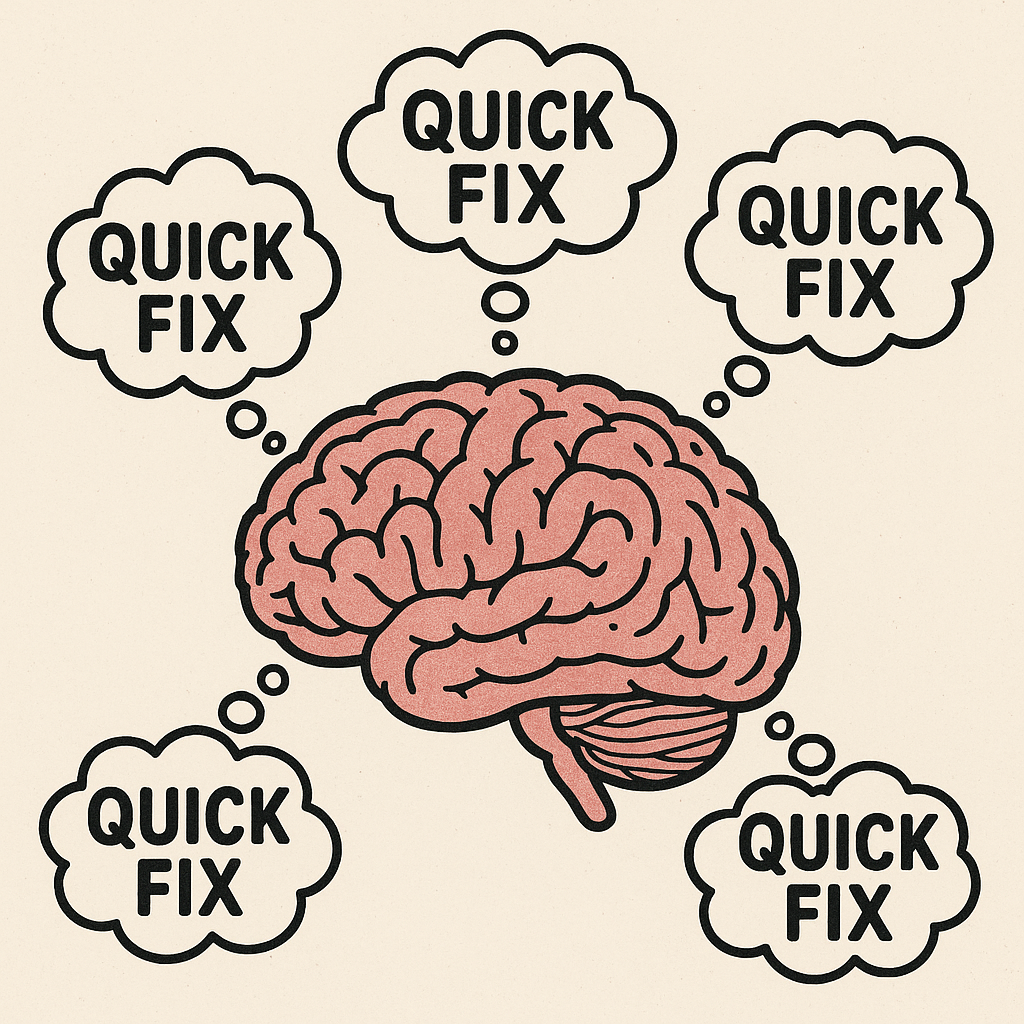
Ever wonder why we keep believing the same fitness lies over and over? It’s not because we’re dumb. Our brains are actually wired to want quick fixes and easy answers.
We Want Everything Right Now
- We live in an instant world – We want results as fast as we get our food delivered
- We think we’re special – We believe we’ll be the one person who gets amazing results
- Simple sounds better – Easy solutions feel better than hard work
We Believe What We Want to Believe
When we really want something to be true (like losing weight fast), we look for information that proves it’s possible. We ignore the stuff that says it won’t work.
MYTH BUSTER TIP: Next time you see a claim that sounds amazing, ask yourself: “Do I want to believe this because I want it to be true, or because there’s real proof?“
Social Media Makes It Worse
Research [5] has shown that false information spreads faster on social media than true information. Here’s why:
- Apps show us more of what we like – if you click on diet posts, you’ll see more diet posts
- Influencers seem trustworthy because they have lots of followers
- Fake news gets more likes and shares than real news
- Stories from real people feel more believable than research studies
Red Flags That Scream “This is Fake!”
Learn to spot these warning signs from far away:
“Get Results Super Fast” Claims
- “Lose 10 pounds overnight!”
- “Get abs in 7 days!”
- “Change your body this week!”
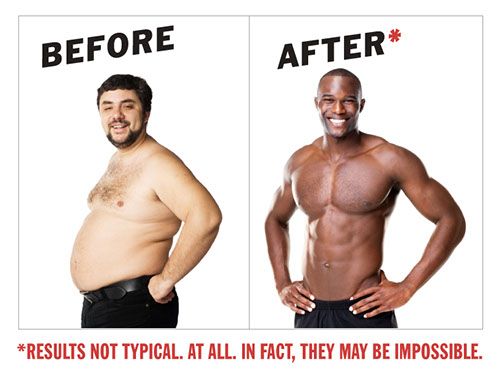
Suspicious Before & After Photos
- Very different lighting or poses
- Huge changes in just days or weeks
- No proof the photos are real
- Professional photos vs. phone selfies
“One Secret Trick” Language
- “Doctors hate this simple trick!”
- “The secret fitness pros don’t want you to know!”
- “This old method melts fat instantly!”
REALITY CHECK: If there really was “one secret trick” that worked amazingly, don’t you think everyone would know about it by now?
Stories Without Proof
- Success stories with no real data
- No mention of diet, exercise, or other factors
- Only showing the people who got results
- Anonymous stories you can’t verify
Influencer Warning Signs
Good Signs  | Bad Signs  |
|---|---|
| Shows real research studies | Makes big claims with no proof |
| Admits when things don’t work | Promises impossible results |
| Has real training or education | Sells miracle products |
| Shows realistic timelines | Uses scary language to sell stuff |
| Tells you to see a doctor | Claims to replace medical advice |
How to Check Claims Like a Smart Person

Time to become a detective! Here’s how to tell real research from fitness nonsense:
Real Research vs. Blog Posts
What makes research trustworthy:
- Published in science journals
- Checked by other smart scientists
- Shows how they did the study
- Other scientists can repeat the experiment
Warning signs of fake “research”:
- Only published on personal blogs or websites
- Doesn’t explain how they tested things
- Cherry-picks only the good data
- Paid for by companies selling related products
Understanding “Goes Together” vs. “Causes”
SIMPLE SCIENCE: Just because two things happen at the same time doesn’t mean one causes the other!
Example: “People who drink green tea weigh less!”
- What we see: Green tea drinkers might weigh less
- What might cause it: Green tea might speed up metabolism
- Reality: Green tea drinkers might just have healthier habits overall
* Questions to Ask About Any Study *
- Who paid for this research? (Are they trying to sell something?)
- How many people were in the study? (More people = better results)
- How long did the study last? (Longer studies are more trustworthy)
- Was there a comparison group? (You need to compare results)
- Did other scientists get the same results? (One study isn’t enough)
Study Size Reality Check
| Number of People | How Much to Trust It | Example |
|---|---|---|
| 5-20 people | Very little | “Small test shows promise” |
| 50-100 people | A little | “Early research suggests” |
| 500-1000 people | Pretty good | “Study shows” |
| 1000+ people | Very trustworthy | “Research proves” |
Good Sources vs Bad “Experts”

Not all fitness advice comes from smart, trained people. Here’s how to tell the difference:
How to Check if Someone Really Knows Their Stuff
Look for these real qualifications:
- Exercise Science degrees (Bachelor’s, Master’s, PhD)
- Certified Personal Trainer (NASM, ACSM, NSCA)
- Registered Dietitian (for food advice)
- Licensed Physical Therapist (for injury stuff)
PRO TIP: You can check if most certifications are real on the organization’s website!
Warning Signs in Social Media “Experts”
Research [4] found that nearly two-thirds of the 100 most popular fitness influencer accounts promoted unhealthy or unrealistic body shapes. Watch out for people who:
- Call themselves “guru” or “expert” without proof
- Have no real education or training you can verify
- Sell expensive courses or supplements
- Make medical claims without medical training
- Use scary tactics or rush you to buy products
Trusted Places for Fitness Information
Best Sources:
- American College of Sports Medicine (ACSM)
- National Academy of Sports Medicine (NASM)
- International Association of Certified Personal Trainers (IACPT)
- Academy of Nutrition and Dietetics
- Mayo Clinic and Cleveland Clinic fitness sections
Good Research Databases:
- PubMed (free medical research)
- Google Scholar (science papers)
- Cochrane Library (research reviews)
Why Even Smart People Can Be Wrong
Even people with real training can:
- Have personal opinions that aren’t based on science
- Misunderstand research
- Share old information that’s no longer true
- Talk about stuff outside their area of expertise
The bottom line: Good qualifications are a great start, but always double-check claims with other sources!
Popular Myths That Won’t Go Away
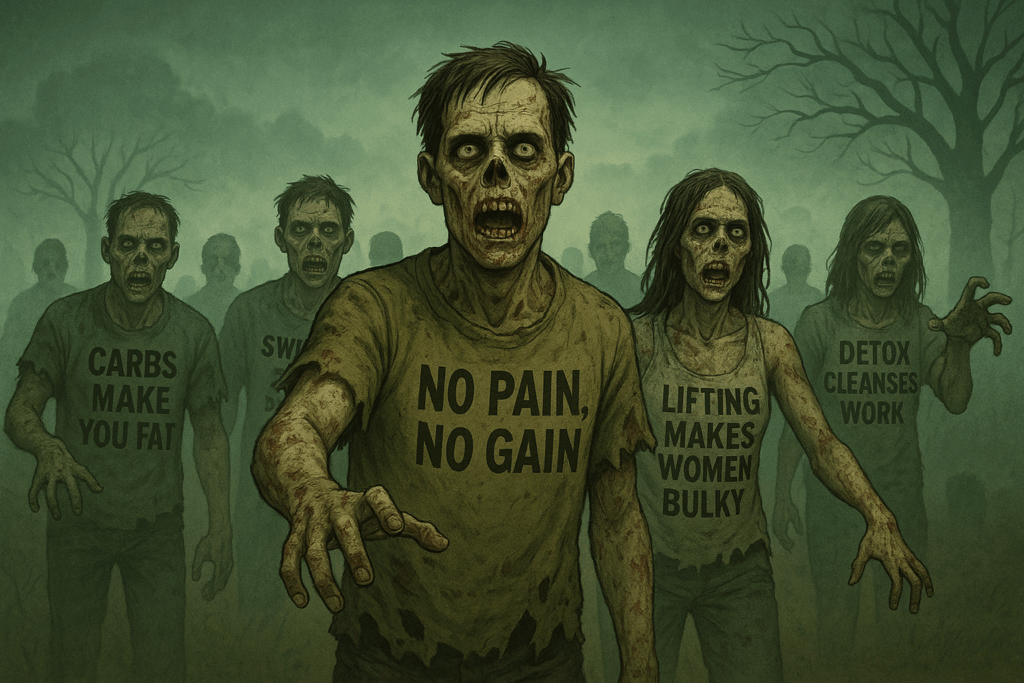
Some myths are like zombies – they just keep coming back! Here are the most stubborn ones:
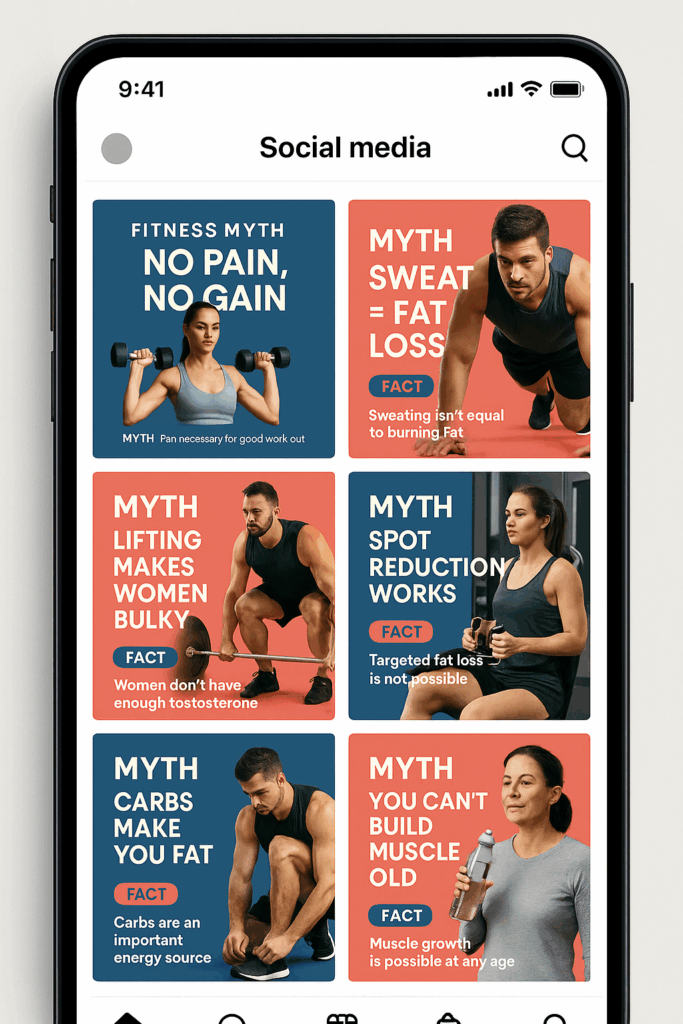
The “Fat Burning Zone” Lie
The Myth: You must exercise at 60-70% of your max heart rate to “burn fat”
The Truth: Your body burns fat at all exercise levels. Working out harder actually burns more total calories and fat.
Why it sticks around: Gym equipment and heart rate monitors show “fat burning zone” displays.
“Target Your Trouble Spots” Claims
The Myth: You can lose fat from specific body areas with special exercises
The Truth: Where you lose fat depends on your genetics, not which exercises you do.
Why it sticks around: Everyone wants to lose fat from their “problem areas” first.
GENETICS 101: Where you lose fat first is decided by your DNA, not your workout routine!
The “Toning” Trick
The Myth: Light weights with lots of repetitions will “tone” muscles without making them bigger
The Truth: “Toning” is just losing fat while keeping or building muscle. There’s no special “toning” process.
Why it sticks around: People (especially women) worry about getting “bulky” from lifting weights.
Women and Weight Lifting Lies
Common Myths:
- “Women will get bulky from lifting weights”
- “Women should only do cardio”
- “Women need different exercises than men”
The Truth: Many fitness influencers promote intense workouts and extreme dieting that can be harmful [4]. The reality is women have much less testosterone than men and won’t easily build large muscles. The same exercises work for everyone!
Cardio vs. Strength Training False Choice
The Myth: You must choose between cardio OR strength training
The Truth: Both have different benefits and work better together for health and fitness.
| Cardio Benefits | Strength Training Benefits |
|---|---|
| Heart health | Stronger bones |
| Better endurance | More muscle |
| Burns calories during exercise | Higher metabolism all day |
| Improves mood | Everyday strength |
“Muscle Confusion” Theory
The Myth: You must constantly change workouts to “confuse” muscles and prevent plateaus
The Truth: Making workouts gradually harder over time is what builds strength and muscle, not confusion.
Why it sticks around: Changing workouts sells more programs and keeps people interested.
Tools to Check if Something is True
Ready to build your lie-detection toolkit? Here are the tools you need:

Must-Have Websites and Databases
For Research:
- PubMed.gov – Free medical research
- Google Scholar – Science papers and studies
- Examine.com – Supplement research based on evidence
For Fact-Checking:
- Snopes.com – General myth-busting
- Science-Based Medicine – Medical claim analysis
- Quackwatch.org – Health scam detection
How to Use Google Scholar Like a Pro
- Search for specific claims (not general topics)
- Look for recent studies (within 5 years)
- Check how many times it’s been cited (more citations = more trustworthy)
- Read the summary carefully (don’t just trust the title)
- Look for review studies (better quality than single studies)
Helpful Browser Add-ons
- Fake News Detector – Warns about questionable websites
- NewsGuard – Rates how trustworthy websites are
- Fact Checker – Cross-checks claims automatically
Your Personal Lie Detection Checklist
Before believing any fitness claim, ask:
- [ ] Who is saying this? (Check their qualifications)
- [ ] What proof do they have? (Look for real studies)
- [ ] Do they make money if I believe this? (Follow the money trail)
- [ ] Does this sound too good to be true? (Trust your gut feeling)
- [ ] What do other experts say? (Get a second opinion)
- [ ] Have other scientists found the same thing? (One study isn’t enough)
ACTION STEP: Save this checklist and use it every time you see fitness advice online!
What to Do When You’ve Been Fooled
Don’t worry – it happens to us all. Here’s how to bounce back:
Step 1 – Don’t Be Hard on Yourself
Falling for fitness myths doesn’t make you stupid. Research [1] shows that 86% of people online have been exposed to fake news, and most initially believed it was real. These claims are designed by people who understand psychology better than most people understand science.
Remember:
- Smart people fall for myths too
- Learning from mistakes makes you smarter
- Your experience can help others avoid the same trap
Step 2 – Figure Out the Damage
Ask yourself:
- How much time did I waste?
- How much money did I spend?
- Did this slow down my progress?
- Could this have hurt my health?
Step 3 – Get Back on Track Smartly
Don’t go to the opposite extreme! If you fell for a “no-carb” myth, don’t start eating only carbs. Find the science-based middle ground.
Steps to get back on track:
- Research the real science behind your goals
- Talk to qualified professionals if needed
- Start with basic, proven methods
- Be patient with the process
Step 4 – Share Your Story
Think about sharing your experience (without naming specific products/people) to help others avoid the same mistake. Your story matters!

When to Get Professional Help
Think about seeing a professional if:
- You’ve tried multiple myths and feel confused
- You have unhealthy relationships with food or exercise
- You have specific health conditions or injuries
- You need accountability and personalized guidance
Types of professionals who can help:
- Registered Dietitians (food guidance)
- Certified Personal Trainers (exercise programs)
- Sports Medicine Doctors (injury prevention/treatment)
- Licensed Therapists (relationship with food/body image)
Main Points to Remember
Let’s wrap this up with the most important stuff:
The Big Picture
- 65% of people read health tips from social media, and 25% follow the diet plans they see [3](Sidhu, 2018)
- Your brain wants quick fixes – that’s totally normal!
- Thinking critically is your best protection
Warning Signs to Remember
- Promises of instant/overnight results
- “One secret trick” marketing language
- Success stories without scientific proof
- Influencers without real qualifications you can verify
Science-Based Checking
- Only 2.7% of popular fitness influencer posts actually cite scientific references [2](Marocolo et al., 2021)
- Look for peer-reviewed research
- Check study sizes and how long they lasted
- Understand the difference between correlation and causation
- Always consider who funded the research
Your Myth-Busting Toolkit
- PubMed for research
- Google Scholar for science papers
- Fact-checking websites
- The Lie Detection Checklist
The Truth About Fitness
- Real progress takes time and consistency
- There are no shortcuts or magic solutions
- The best advice is often the most boring
- Evidence-based methods work best
Take Action Today!
Now, we’ve learned how not to fall for a fitness myth that promises amazing results and deliver nothing but disappointments. With this knowledge, you’ll now be able to spot these claims before they waste your time, money, or worse, potentially hurt your health.
Remember, real fitness progress takes time, consistency, and evidence-based approaches. There are no shortcuts, magic pills, or secret techniques that fitness professionals don’t want you to know about. The best fitness advice is usually the most boring: eat well, move regularly, get enough sleep, and be patient with the process.
Your homework? Start using these myth-detecting skills today! The next time you see a fitness claim that seems too good to be true, use your new lie detector skills. Question everything, ask for evidence, and always put your long-term health over quick fixes.
Found this helpful? Share it with someone who might be falling for fitness myths. Knowledge is power, and together we can fight misinformation one person at a time.
References
- Ipsos. (2019). Fake News: A Global Epidemic – Vast Majority (86%) of Online Global Citizens Have Been Exposed to it. Centre for International Governance Innovation.
- Marocolo, M., Meireles, A., de Souza, H. L. R., Mota, G. R., Oranchuk, D. J., Arriel, R. A., & Leite, L. H. R. (2021). Is Social Media Spreading Misinformation on Exercise and Health in Brazil? International Journal of Environmental Research and Public Health, 18(22), 11914.
- Sidhu, S. (2018). Social Media, Dietetic Practice and Misinformation: A triangulation research. Journal of Content, Community and Communication.
- Banner Health. (2023). The Dark Side of Fitness Influencers on Social Media. Banner Health.
- Vosoughi, S., Roy, D., & Aral, S. (2018). The spread of true and false news online. Science, 359(6380), 1146-1151.
