
Evidence-Based Nutrition Guide – Your Complete 2025 Roadmap to Science-Backed Eating


Discover the ultimate evidence-based nutrition guide! Learn how to separate nutrition facts from fiction using scientific research. Start your journey to healthier eating today.
Introduction
Did you know? Studies show that most nutrition advice online isn’t backed by solid science. Pretty wild. With so much confusing information out there, no wonder you feel lost about what to eat. One day eggs are bad for you, the next day they’re a superfood. One expert says carbs will make you fat, another says fat is the problem. It’s exhausting!
But here’s the good news – when you learn to understand nutrition science, everything becomes way clearer. You’ll finally know what actually works, what doesn’t, and why. This guide will teach you exactly how to make smart food choices using real scientific research. No more guessing, no more falling for flashy headlines – just solid, research-backed info that actually works!
What Evidence-Based Nutrition Really Means
Evidence-based nutrition means making food choices based on real scientific studies – not what influencers on Instagram or magazine headlines tell you.
Simple Definition
Evidence-based nutrition = using actual scientific research from peer-reviewed studies to guide what you eat, not trends or marketing claims.
Why This Approach Actually Works
According to research from the National Academy of Sciences (2024) [11], using evidence-based approaches in nutrition helps you:
- Cut through misinformation – You’ll spot the difference between real science and clever marketing
- Save your money – Stop wasting cash on supplements and fad diets that don’t work
- See real improvements – Get genuine, lasting results for your health
- Feel confident – Know exactly why you’re making the food choices you make
- Stay safe – Avoid potentially harmful nutrition trends
Real Science vs. Marketing Hype

(Here’s how to tell the difference) Marketing hype usually includes:
- Celebrity endorsements and influencer posts
- Scary headlines designed to get clicks
- Amazing success stories from just a few people
- Studies paid for by companies selling the product
Real science comes from:
- Studies published in respected scientific journals
- Large research projects with proper control groups
- Reviews that combine multiple studies
- Research done by independent universities and institutions

Red Flags to Watch Out For
- “This one weird trick…” or “Doctors hate this!”
- Promises of fast, dramatic results
- “Breakthrough” discoveries that sound too good to be true
- Studies with only 20-30 people (too small to trust)
- Research funded completely by companies selling the product
- Claims that go against decades of solid research
Which Studies Should You Trust Most?
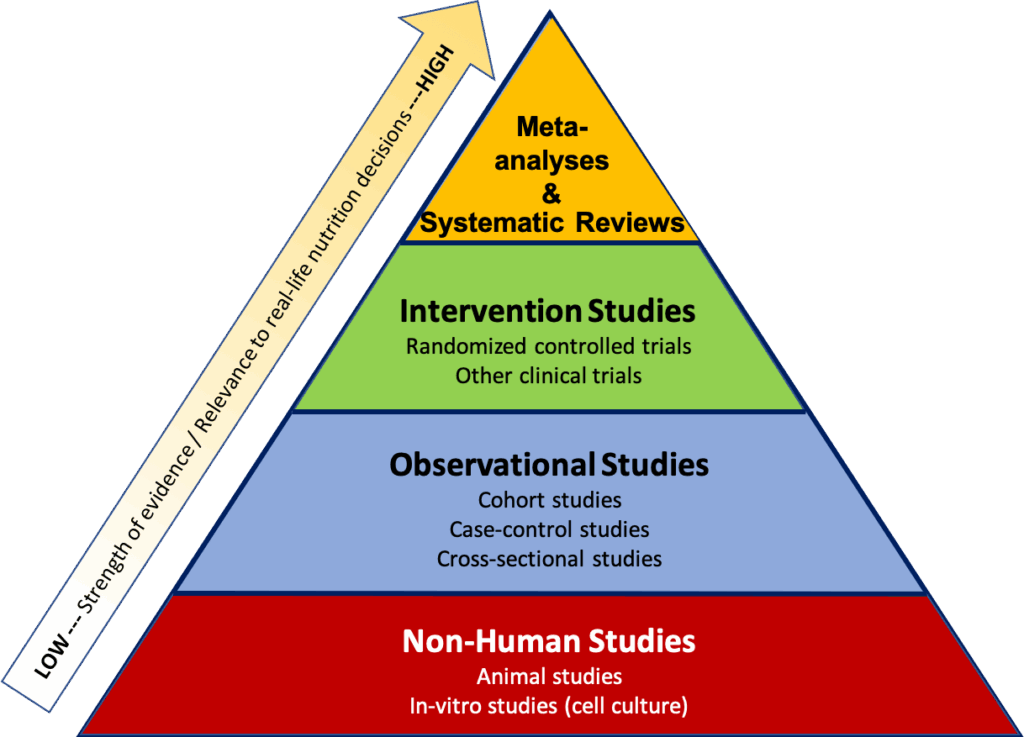
Not all nutrition studies are created equal! Some give you much stronger evidence than others. Here’s how scientists rank different types of research, from strongest to weakest:
The Evidence Pyramid (Strongest to Weakest) [10]
- 1. Systematic Reviews & Meta-Analyses
- 2. Randomized Controlled Trials (RCTs)
- 3. Observational Studies
- 4. Case Studies & Expert Opinions
1. Systematic Reviews and Meta-Analyses – The Gold Standard
These studies look at tons of other studies and find the common patterns. They’re like taking the best evidence from dozens of research projects and combining them.
Why These Matter Most
One study might look at 100 people, but a meta-analysis can combine 20 studies with 10,000+ people total. Way more reliable!
A 2019 review in the British Journal of Nutrition [9] found that meta-analyses in nutrition research have grown dramatically – from just 1 study in 1978 to over 2,700 in 2018, showing how important this approach has become.
2. Randomized Controlled Trials (RCTs)
These are the “gold standard” for individual studies because they:
- Randomly put people into different groups
- Control for things that might mess up the results
- Often use fake treatments (placebos) to eliminate bias
- Follow people over time to see what happens
3. Observational Studies – Useful but Limited
These studies just watch what people do and see what happens to their health. They can show interesting connections but can’t prove that one thing caused another.
Quick Study Check
Before trusting any nutrition study, ask:
- How many people were studied? (More = better)
- How long did it last? (Longer = better for nutrition)
- Was there a control group?
- Who paid for the research?
- Have other researchers found the same thing?
How to Read Nutrition Studies Like a Pro
You don’t need a science degree to understand nutrition research! Here are some simple skills that’ll help you figure out what studies are worth believing.
Breaking Down Study Summaries
Most studies have a summary (called an “abstract”) at the beginning. Here’s what to look for:
- What they wanted to find out – What question were they trying to answer?
- How they did it – What method did they use?
- What they found – What were the actual results?
- What they think it means – What’s their conclusion?
Why Study Size Matters
The number of people in a study makes a huge difference:
- 10-50 people – Interesting, but don’t change your whole diet based on this
- 100-500 people – More meaningful, especially if well-designed
- 1,000+ people – Strong evidence you can probably trust
- 10,000+ people – Very strong evidence for most conclusions
Spotting Correlation vs. Causation
Correlation – “People who eat more vegetables tend to be healthier”
Causation – “Eating vegetables directly makes you healthier”
Most nutrition studies show correlation, not causation. Be careful of headlines that claim direct cause-and-effect!
Who Paid for the Study?
This is super important! Always check who funded the research:
- Red flag – Studies paid for entirely by companies selling related products
- Be cautious – Industry-funded research (can be good but needs extra checking)
- Usually best – Government-funded or independent research
Helpful Tools and Websites
| Resource | What It Is | Best For |
|---|---|---|
 | Medical research database | Finding peer-reviewed studies |
 | High-quality reviews | Evidence summaries |
 | Easy-to-read research summaries | Quick evidence reviews |
| Nutrition.gov | Government nutrition info | Official dietary guidelines |
Busting Common Nutrition Myths with Real Science
Let’s tackle some of the biggest nutrition myths using actual scientific studies. You might be surprised by what the research really shows!
MYTH: Detox Diets and Cleanses Remove Toxins
REALITY: Your liver and kidneys already do an amazing job removing toxins from your body 24/7. There’s no solid scientific evidence that juice cleanses or detox teas help your body get rid of “toxins” any better than it already does.
The Research: A 2015 critical review by Klein and Kiat [8] found that there’s very little clinical evidence to support detox diet claims. In fact, some detox products can actually harm your liver.
Harvard Medical School and Johns Hopkins [6] both confirm that your body has amazing built-in detox systems that work without special products.
MYTH: Carbs Make You Fat.
REALITY: Total calories determine weight gain or loss, not specific types of food. Many of the world’s healthiest populations eat lots of carbs.
The Research: A major 2017 meta-analysis by Hall and Guo[5] looked at studies where people ate the same number of calories but different amounts of carbs and fat. Result? Almost identical weight changes. The small difference in metabolism was only about 26 calories per day – basically nothing.
Multiple other large-scale studies confirm this. A 2020 meta-analysis [4] of 38 studies with over 6,000 people found that when calories were matched, low-carb and low-fat diets produced very similar weight loss results.
MYTH: Eating Small, Frequent Meals Boosts Your Metabolism.
REALITY: While meal timing can affect energy levels and hunger, it has very little impact on overall metabolism or weight loss.
The Research: A 2015 meta-analysis by Schoenfeld and colleagues [3] looked at 15 studies on meal frequency. Their conclusion? Total daily calories matter way more than when you eat them. The supposed “metabolism boost” from eating frequently is mostly wishful thinking.
More recent research from 2024 in JAMA [2] confirms that meal timing strategies like eating fewer meals can help some people lose weight, but the effects are small and mainly because people end up eating fewer total calories.
The Truth About Supplements
The supplement industry is worth billions, but most healthy adults don’t need most supplements:
- Multivitamins – A 2013 meta-analysis of 21 studies [1] with over 91,000 people found no effect on death rates from heart disease, cancer, or any other cause. For most people with decent diets, they’re unnecessary.
- Vitamin D – Actually helpful if you’re deficient (common in northern climates or if you don’t get much sun)
- Omega-3s – Can be helpful if you rarely eat fish
- Protein powder – Convenient but not necessary if you get enough protein from food
Try This Challenge
Pick one nutrition claim you’ve always wondered about and look it up using the tools from this guide. Start with Examine.com or PubMed to see what the actual science says!
Building Your Science-Based Eating Plan
Now that you know how to spot good nutrition science, let’s build a practical eating approach based on the strongest research evidence.
The Big Four Science-Backed Principles
- Calorie balance – Energy in vs. energy out determines weight (this is basic physics!)
- Enough protein – About 0.8-1.2 grams per kilogram of body weight for most people
- Get your vitamins and minerals – Choose foods rich in nutrients
- Be consistent – Habits you can stick to beat “perfect” short-term diets
Science-Based Food Balance Guidelines
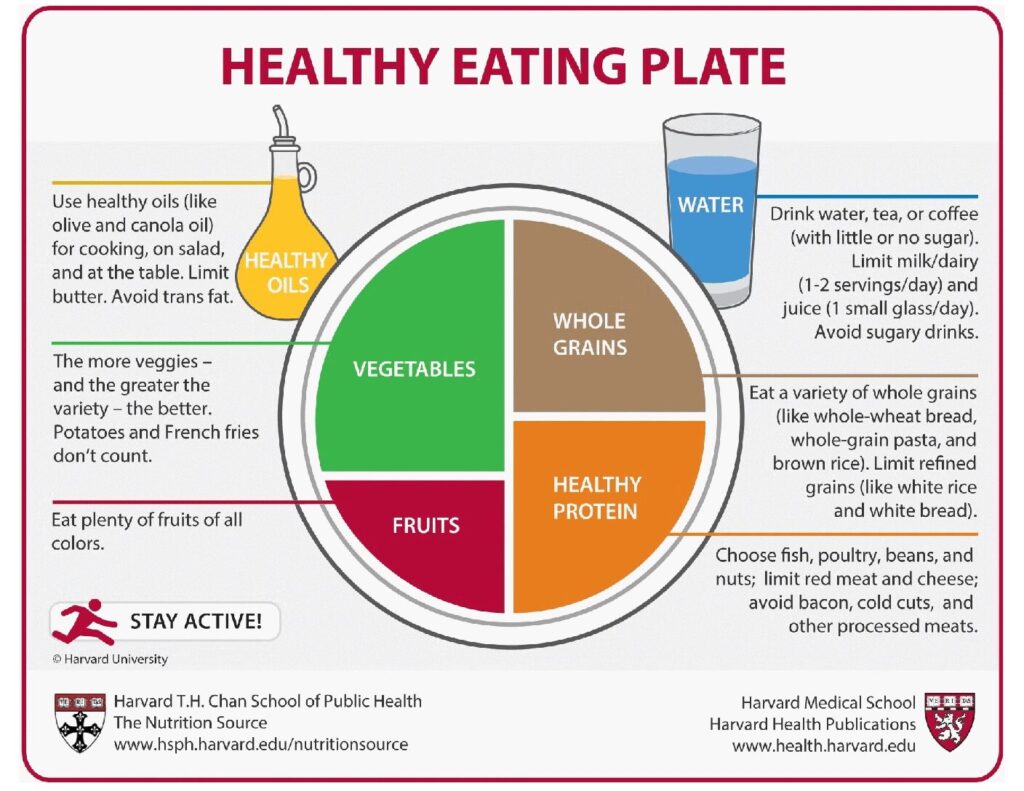
Based on tons of research, here are the ranges that work for most people:
- Protein – 10-35% of your total calories (higher if you’re active)
- Fats – 20-35% of total calories (focus on unsaturated ones like olive oil, nuts)
- Carbs – 45-65% of total calories (go for whole grains when you can)
Simple, Flexible Meal Planning
Instead of strict meal plans, try these flexible guidelines:
- Fill half your plate with vegetables and fruits
- Include a protein source at each meal (meat, beans, eggs, etc.)
- Choose whole grains over refined ones when possible
- Add some healthy fats like nuts, olive oil, or avocado
- Drink mostly water instead of sugary drinks
Everyone’s Different
Remember that nutrition is personal:
- Your genes – Some people process certain nutrients differently
- How active you are – Athletes need different nutrition than couch potatoes
- Health conditions – Diabetes, food allergies, and other issues require adjustments
- Your preferences – The best diet is one you can actually stick to long-term
Build Your Personal Plan
- Figure out roughly how many calories you need (use an online calculator)
- Set your protein target (your weight in kg × 0.8-1.2)
- Plan meals around whole foods you actually enjoy eating
- Pay attention to your energy levels and how foods make you feel
- Adjust based on your results and what works for you
When Studies Disagree – What to Do
One study says coffee is bad, another says it’s healthy. Sound familiar? Conflicting research happens all the time in nutrition, but you can learn to deal with it like a pro.
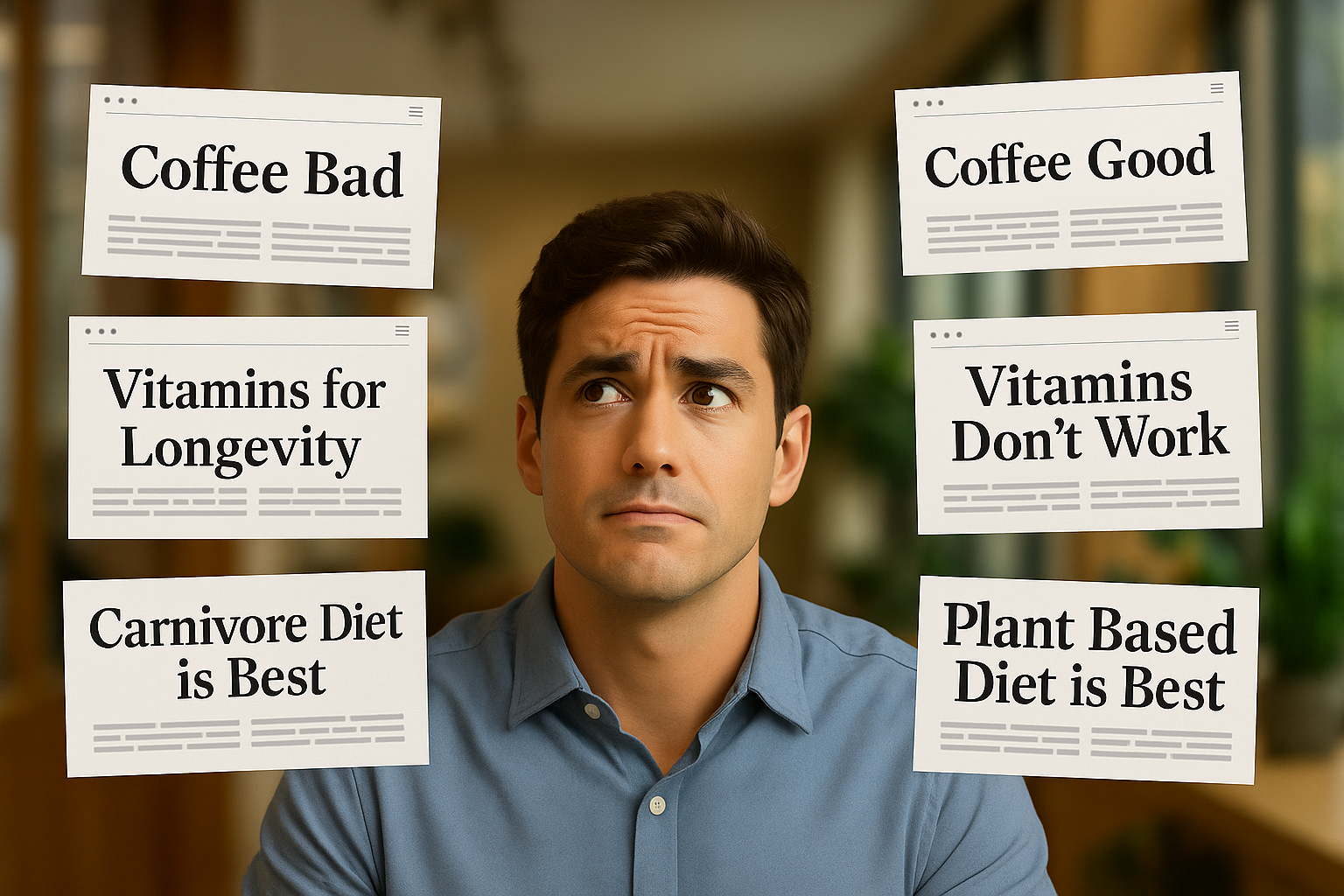
Why Studies Sometimes Give Different Answers
- Different people studied – A study on older people might not apply to young adults
- Different methods used – Watching people vs. controlling what they eat can give different results
- Different timeframes – Short-term vs. long-term studies often show different things
- Different amounts tested – The dose makes a huge difference
- Publication bias – Positive results are more likely to get published than negative ones
When Studies Conflict, Ask Yourself:
- Which study was bigger and lasted longer?
- Which had a better method?
- What do most studies on this topic say overall?
- Are there obvious reasons to doubt either study?
- What do the big review studies conclude?
When Should You Actually Change What You’re Doing?
Don’t flip your diet every time a new study comes out! Consider changing when:
- Multiple high-quality studies consistently show the same thing
- A major review study changes previous conclusions
- New evidence directly contradicts what you’re currently doing
- Your current approach just isn’t working for your goals
Building Confidence in Your Decisions
The goal isn’t to be perfect – it’s making good decisions based on the best evidence available while staying flexible as we learn new things.
Where to Find Trustworthy Nutrition Info
Knowing where to find reliable nutrition information is just as important as knowing how to read it. Here are the sources I trust most.
Best Scientific Journals
| Journal | What They Cover | Why They’re Trustworthy |
|---|---|---|
| American Journal of Clinical Nutrition | Human nutrition research | Tough review process, high standards |
| Nutrients | All aspects of nutrition | Open access, broad coverage, quality standards |
| Cochrane Database | Systematic reviews | Independent, highest evidence standards |
| British Journal of Nutrition | Comprehensive nutrition research | Long-established, peer-reviewed |
How to Spot Good Nutrition Experts
Look for people who:
- Have real degrees in nutrition, medicine, or related fields
- Regularly mention and cite actual research studies
- Admit when they don’t know something or when evidence is unclear
- Don’t try to sell you supplements or promote extreme diets
- Change their views when new good evidence comes out
Watch Out For These Red Flags
- No real scientific training or fake degrees
- Promotes “miracle” cures or expensive supplements
- Claims “doctors don’t want you to know this”
- Relies mostly on personal success stories instead of research
- Says entire food groups are evil without good evidence
- Makes huge claims without backing them up with studies
Building Your Go-To Resource List
Create Your Trusted Source List
- Bookmark 3-5 reliable websites from this guide
- Follow evidence-based nutrition experts on social media
- Sign up for one quality nutrition newsletter
- Learn the basics of using PubMed for research
- Join science-based nutrition communities for discussions
Your Science-Based Nutrition Journey Starts Now
You now have the tools to cut through nutrition confusion and make decisions based on solid science! Remember, evidence-based nutrition isn’t about being perfect – it’s about making informed choices that work for your unique life.
Start by using just one or two ideas from this guide, then gradually build your knowledge as you get more comfortable reading research. The key is staying curious, questioning bold claims, and always looking for the evidence behind nutrition advice.
Your Next Steps
- Pick one nutrition myth you’ve always wondered about and research it using real studies
- Bookmark 2-3 reliable sources from this guide
- Practice reading one research summary using the skills you learned
- Start building your flexible eating plan based on the science-backed principles
- Share this knowledge with someone who could benefit from evidence-based nutrition
Ready to Make Smarter Food Choices? Start Today!
Found This Helpful? Share the Science!
Help others discover evidence-based nutrition by sharing this guide. Together, we can fight nutrition misinformation with solid science!
Resources
- Research Source: Pase, M.P., et al. (2013). Multivitamin-multimineral supplementation and mortality: a meta-analysis of randomized controlled trials. The American Journal of Clinical Nutrition, 97(2), 437-444.
- Research Source: Popp, C.J., et al. (2024). Meal timing and anthropometric and metabolic outcomes: a systematic review and meta-analysis. JAMA Network Open, 7(11), e2442140.
- Research Source: Schoenfeld, B.J., Aragon, A.A., & Krieger, J.W. (2015). Effects of meal frequency on weight loss and body composition: a meta-analysis. Nutrition Reviews, 73(2), 69-82.
- Research Source: D’Angelo, S., et al. (2020). The effect of low-fat and low-carbohydrate diets on weight loss and lipid levels: a systematic review and meta-analysis. Nutrients, 12(12), 3774.
- Research Source: Hall, K.D., & Guo, J. (2017). Obesity energetics: body weight regulation and the effects of diet composition. Gastroenterology, 152(7), 1718-1727.
- Research Source: Harvard Health Publishing. (2008). The dubious practice of detox. Harvard Medical School.
- Additional Source: Johns Hopkins Medicine. (2025). Detoxing Your Liver: Fact Versus Fiction.
- Research Source: Klein, A.V., & Kiat, H. (2015). Detox diets for toxin elimination and weight management: a critical review of the evidence. Journal of Human Nutrition and Dietetics, 28(6), 675-686.
- Research Source: Kelley, G.A., & Kelley, K.S. (2019). Systematic reviews and meta-analysis in nutrition research. British Journal of Nutrition, 122(11), 1279-1294.
- Research Source: European Food Information Council. “The levels of evidence in nutrition research.” Based on research hierarchy guidelines used by major health organizations.
- Research Source: National Academies of Sciences, Engineering, and Medicine. 2024. Use of Meta-Analyses in Nutrition Research and Policy: Proceedings of a Workshop Series. Washington, DC: The National Academies Press.
